$34.41
$67.78
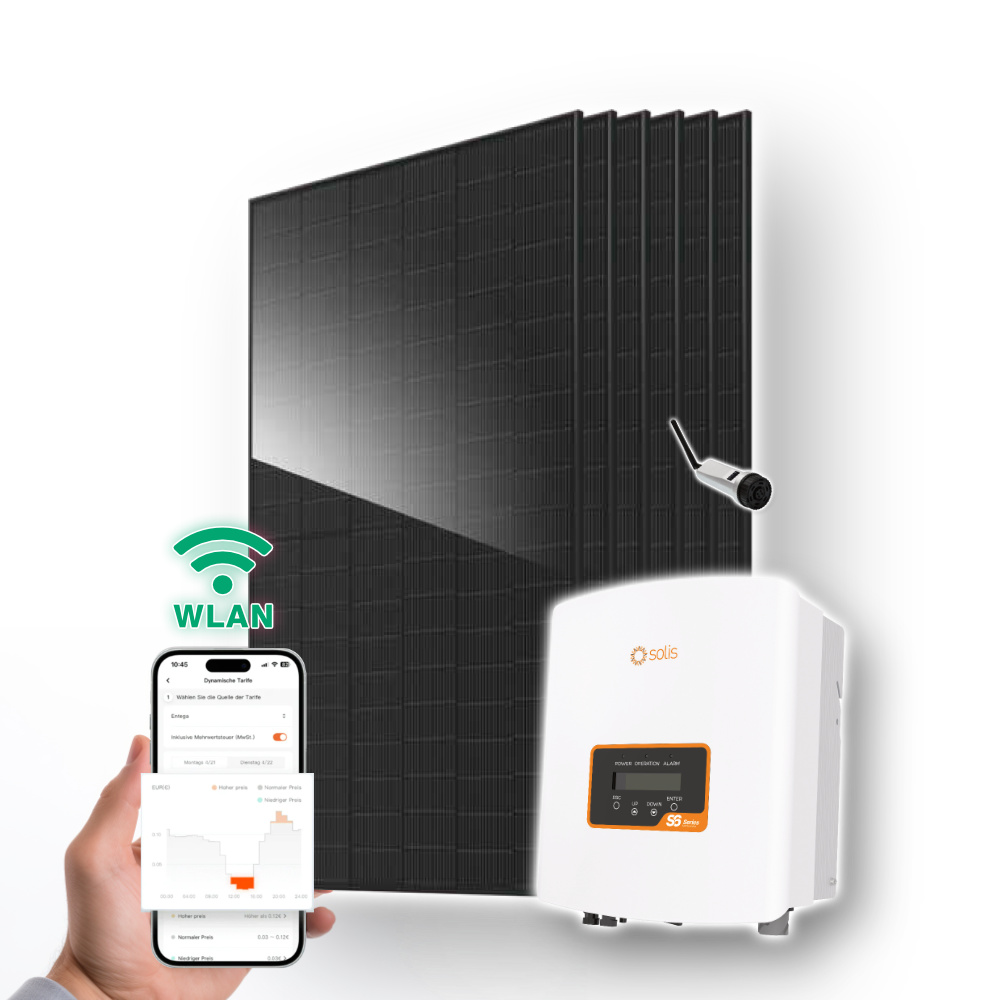
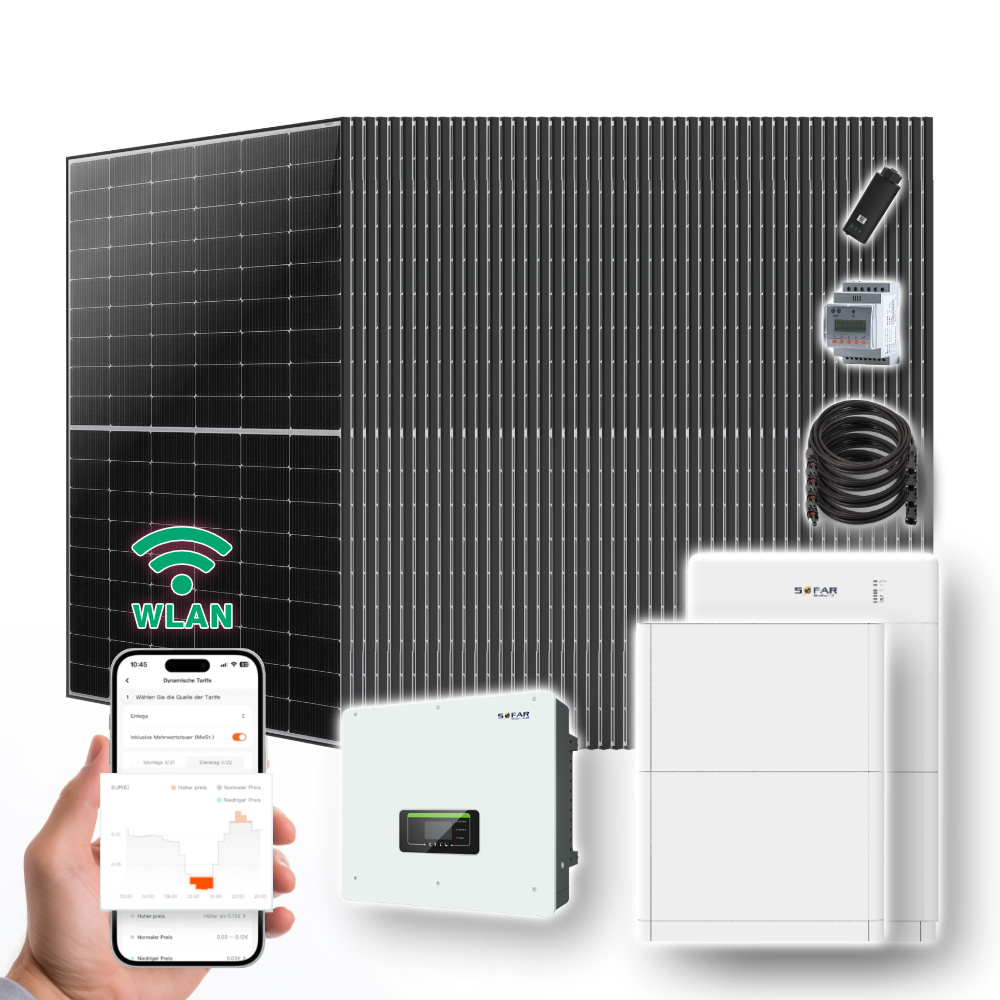
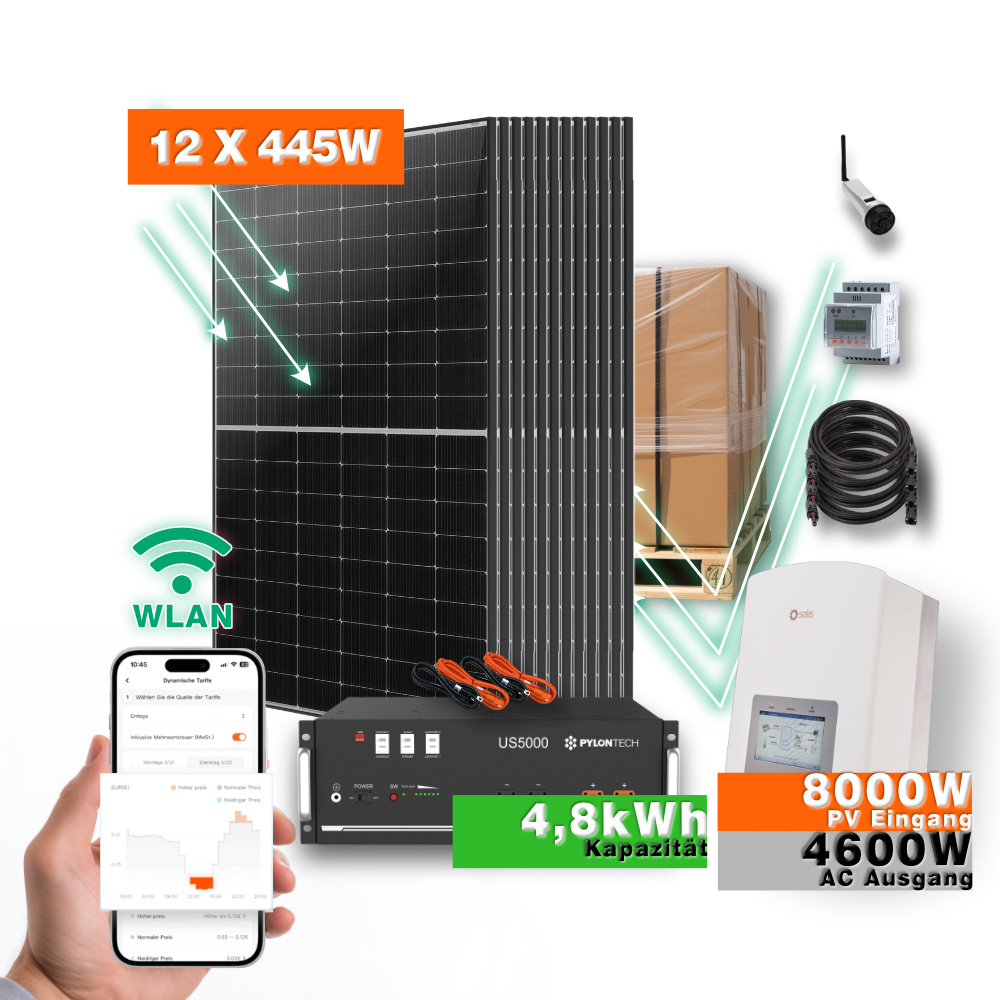
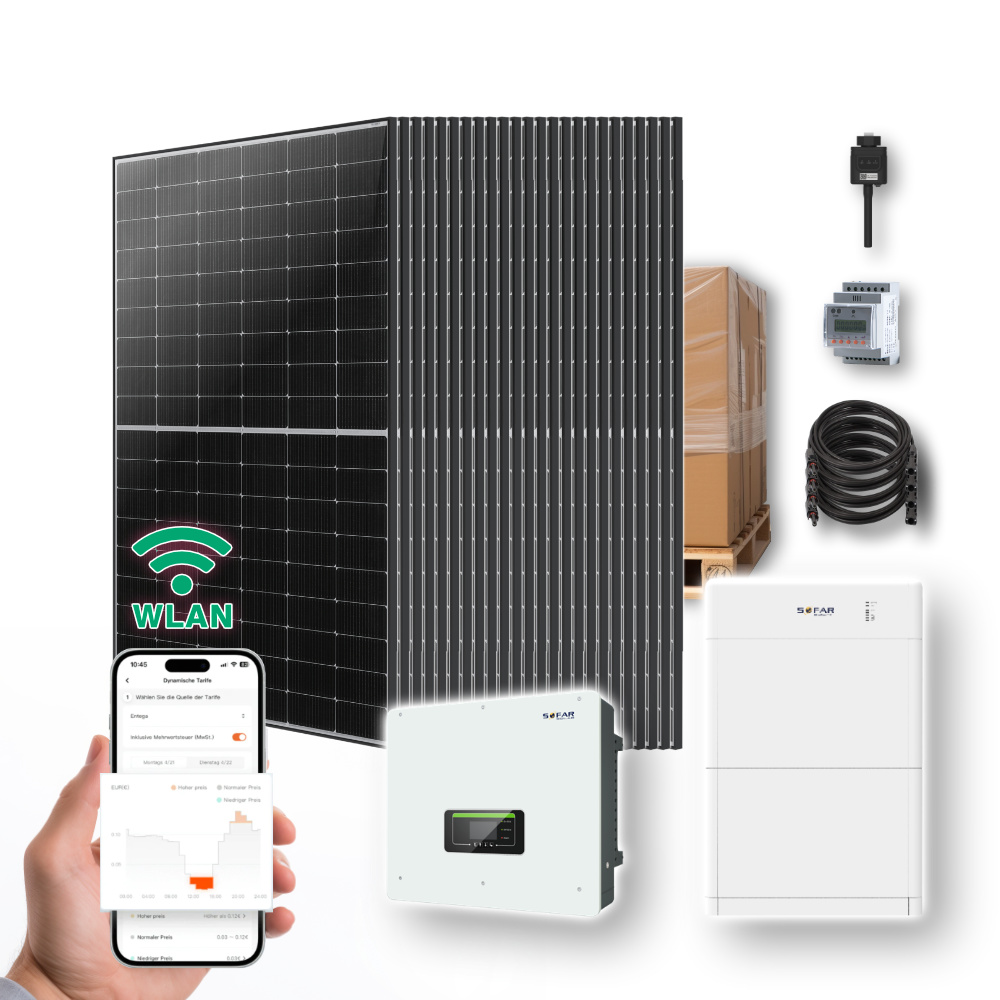
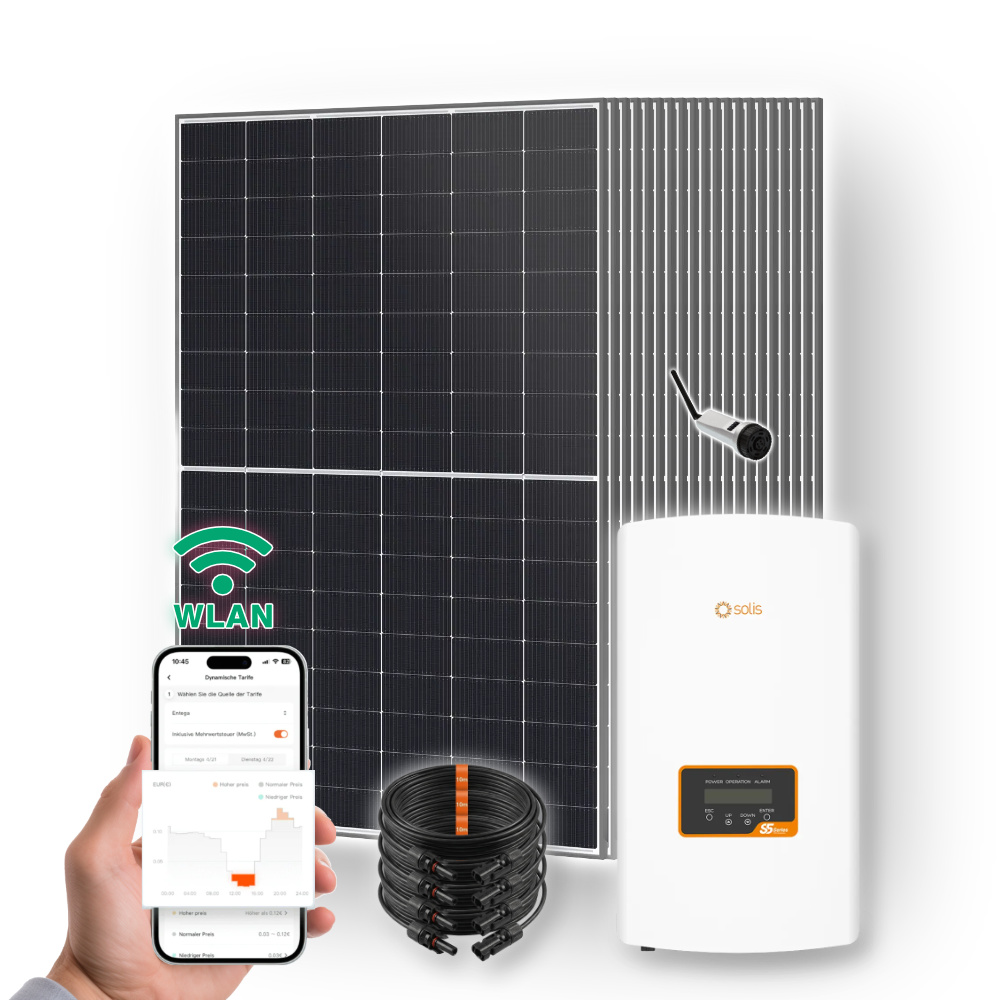
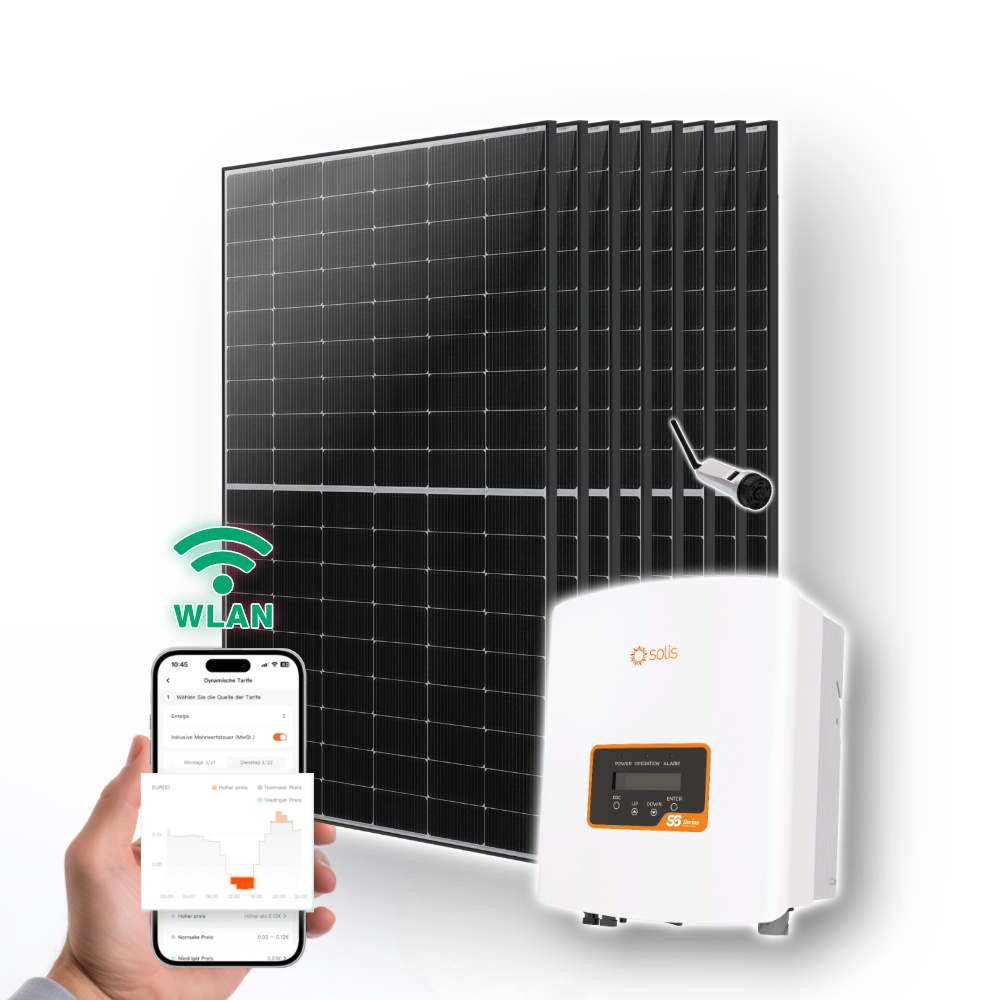
Efficient solar system for high self-sufficiency With 20 high-performance bifacial solar modules, the 10kW solar system generates between 9.000 and 11.000 kWh per year, depending on location and orientation. During the day, you can use the generated electricity directly in your household, significantly reducing your electricity costs. Any surplus electricity is fed into the grid, for which you receive a legally guaranteed feed-in tariff. The Solis S5-GR3P10K string inverter converts your solar power into grid-compatible AC power with an efficiency of up to 98,1%, virtually without loss. Equipped with two MPP trackers, it optimizes energy yield even with two differently oriented roof surfaces or partial shading. The robust metal housing with IP65 protection allows for installation in sheltered outdoor areas. Bifacial technology for up to 30% increased yield The JA Solar JAM54D40-LB modules utilize bifacial technology, generating electricity from the back as well. Reflected light from bright roof surfaces, gravel, or snow can increase energy yields by up to 30%. With an efficiency of 22,3% and a robust glass-glass construction, these modules are among the most durable and efficient on the market. Intelligent monitoring via WLAN Thanks to the included Wi-Fi dongle, you can conveniently monitor your electricity generation at any time via smartphone or computer. You can see in real time how much electricity you are generating, how much you are consuming yourself, and how much you are feeding into the grid. The intuitive app gives you complete control over your system – from anywhere. Flexible expansion with storage or hot water The system is designed without battery storage but can be expanded at any time. An AC-coupled battery storage system increases your self-consumption and makes you more independent from the electricity supplier. Alternatively or additionally, you can convert excess solar power directly into hot water using a my-PV immersion heater – a particularly cost-effective way to increase your self-consumption and reduce heating costs. Here you will find our solutions for heating with photovoltaics. A secure long-term investment With a 25-year product warranty on the modules and a 10-year warranty on the inverter, you are investing in a secure energy supply for the long term. The system requires approximately 45 m² of roof space and pays for itself in 8-12 years, depending on electricity prices and self-consumption. Installation note This system may only be connected to the electricity grid by a qualified electrician registered with the grid operator. Registration with the grid operator and registration in the market master data register are required. Technical information Solar Panels Number: 24 piece Type: JA Solar JAM54D40/LB 450W Technology: Bifacial, black frame, glass-glass Total output: 10,8 kWp Efficiency: 22,3% Warranty: 25 years product warranty, 30 years linear performance warranty Dimensions per module: 1.762 x 1.134 x 30 mm Required roof area: approx. 45 m² Inverters for Home Model: Solis S5-GR3P10K Rated power: 10.000 W Max. DC power: 15.000 Wp Number of MPP trackers: 2 Maximum efficiency: 98,1% Number of strings: 2 Protection class: IP65 Warranty: 10 years Monitoring: WLAN stick included Detailed technical data can be found in the datasheets (see Downloads). Downloads Inverters for Home Solis datasheet Solis Installation and Operating Manual Declaration of Conformity and Unit Certificate Guarantee WLAN data logger Solar Panels Solar module datasheet Declaration of Conformity for Solar Module Frequently asked questions (FAQs) How big does my roof need to be? You will need approximately 45 m² of free roof space for the 24 solar panels. Ideally, the panels should face south, southwest, or southeast. East-west facing roofs are also possible thanks to the two MPP trackers, allowing for more consistent power production throughout the day. What does bifacial technology mean? Bifacial solar panels generate electricity from both sides. Reflected light from bright surfaces like white roofs, gravel, or snow allows the back side to generate additional energy. Depending on the surface, this can result in up to 30% higher yields – at no extra cost. Can I retrofit a battery storage system later? Yes, this system can be expanded with an AC-coupled storage system such as the Marstek Venus E. The storage system is installed between the inverter and the house's electrical distribution panel and operates independently of the solar inverter. This allows you to use your self-generated electricity in the evenings and at night, increasing your self-consumption. Can I use excess solar power for hot water? Yes, with a my-PV heating element (e.g., AC•THOR), you can convert excess solar power directly into hot water. The heating element is installed in your hot water storage tank and automatically uses the electricity that you are not currently using in your household. This is a particularly cost-effective way to increase your self-consumption and simultaneously reduce your heating costs – especially attractive in the summer months. What happens to the electricity I don't use? Excess electricity that you don't use yourself is automatically fed into the public grid. The feed-in tariff is a legal entitlement under the Renewable Energy Sources Act (EEG) and is paid by the grid operator as soon as you have registered your system with them and it has been entered into the market master data register. For systems with self-consumption (surplus feed-in), the tariff is currently around 8 cents per kWh. The grid operator is legally obligated to pay – a separate feed-in agreement is not required. The higher your self-consumption, the more economical the system is, as self-consumed solar power replaces the significantly more expensive grid electricity, while the feed-in tariff is only a fraction of the electricity price. What is the advantage of having two MPP trackers? With two MPP trackers, you can distribute the solar panels across two differently oriented roof surfaces (e.g., east-west). Each tracker optimizes its string group independently and compensates for partial shading or different orientations. This maximizes your overall yield. How do I register with the network operator? The installation must be carried out by a qualified electrician registered with the grid operator. Your installer will usually handle the registration with the grid operator. As the system operator, you are responsible for registering the system in the Federal Network Agency's market master data register – this can be done online in just a few minutes. Both are legally required and prerequisites for receiving the feed-in tariff. What annual return can I expect? With optimal south-facing orientation and a 30° roof pitch, you can expect an annual yield of 9.000 to 11.000 kWh in Germany. The actual yield depends on your location, roof orientation, pitch, and any shading.
Pv Systems